Deeply researched and politically incisive walking tours since 2025.
Our Tours
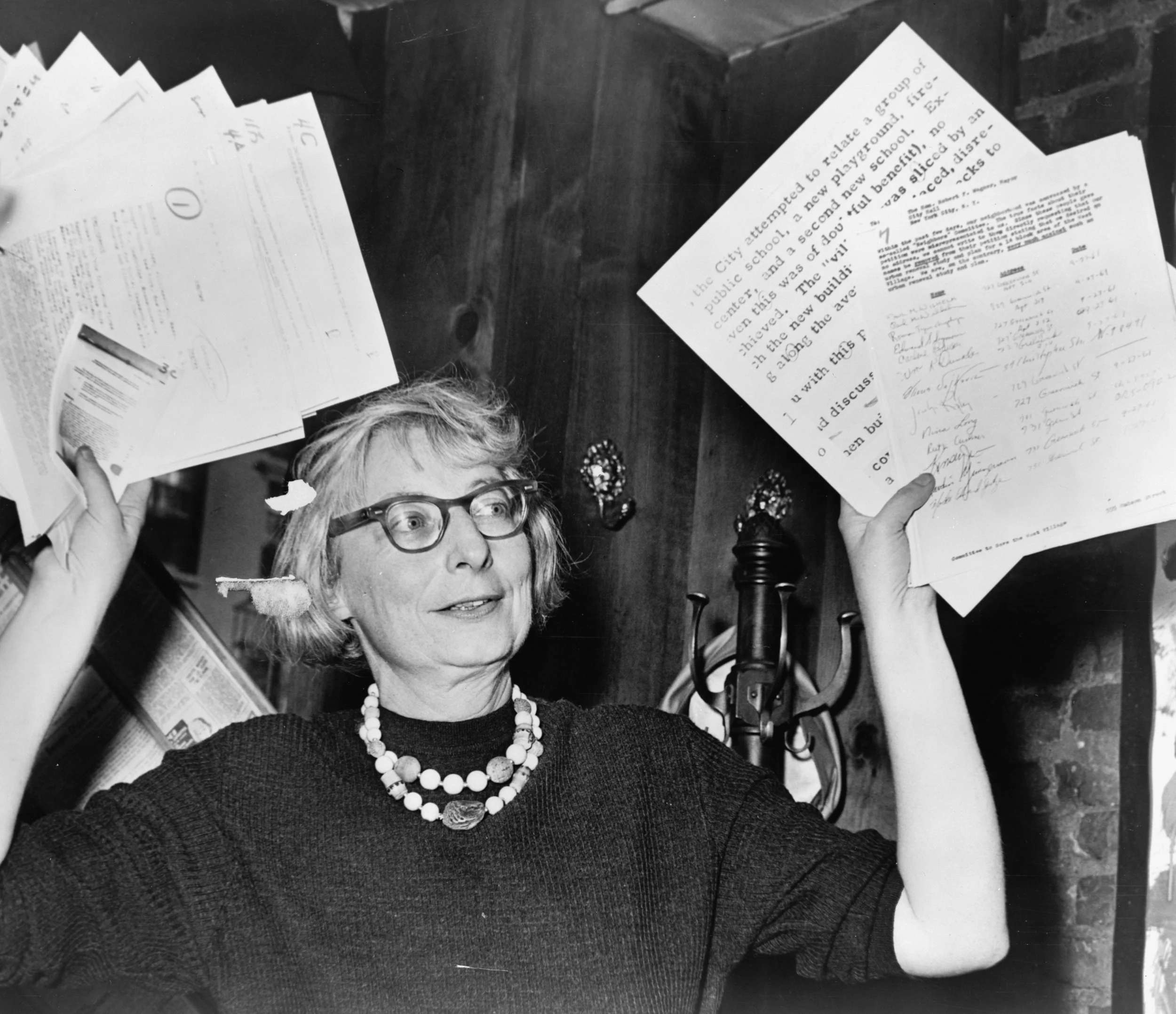
Jane Jacobs, Greenwich Village, and the Life of the City
Few writers have had as significant an impact on their subjects as Jane Jacobs, whose ideas—“mixed-use,” “sidewalk ballet,” “organized complexity,” and “eyes on the street,” to name a few—established the terms in which urban policy is still often discussed. In this tour, we will embark on a collective investigation of Jacobs’s theories using her prescribed method—walking. In traversing Greenwich Village, Jacobs’s adopted home and the seedbed of her way of looking at the city, we will visit the places that nurtured her ideas while discussing what those ideas are, what they capture, and what they miss.

The Cooperative Housing Dream
Between the 1920s and the 1980s, hard-nosed dreamers built hundreds of thousands of units of cooperative housing using models that kept them affordable for the working class and sheltered from the speculative real estate market. Join us on a walk down Grand Street, the epicenter of the cooperative dream in New York, as we discover its roots, its personalities, its historical context, its controversies, and its lasting triumphs. The architects of cooperative housing believed they had found a model that would allow ordinary people to help themselves, financing and maintaining their own housing while practicing democratic decision-making for the cooperative society to come. Did they succeed? Could it happen again?
Book a Tour
Our tours are less sightseeing experiences than mobile classrooms that combine intellectual discussion with a physical experience of the city. There is something special about thinking—and thinking collectively—while moving that creates a distinctive experience that’s hard to describe but can’t be replicated. Each tour is led by a credentialed historian and frequently published writer with over a decade of teaching experience. Included with each tour is an annotated syllabus for further self-guided study.
We steer away from quick hits and factoids, choosing instead to look at how the history of New York can be read through its built environment, revealing the structural forces and contradictions that make the city a beautiful and maddening place to live.
Our tours are intended not only as a fun thing to do but as a contribution to building a community of people who love and care about New York, who believe in what New York is and what it represents. We tend to attract people who want an intellectually robust experience and who are trying to develop their understanding of the city in order to use it in their efforts to make this a more fulfilling place for everyone living here (or even just visiting). This makes our tours good opportunities to get in touch with what it is that drew you to this city and to meet other people who care about the same things as you.
Our Outlook
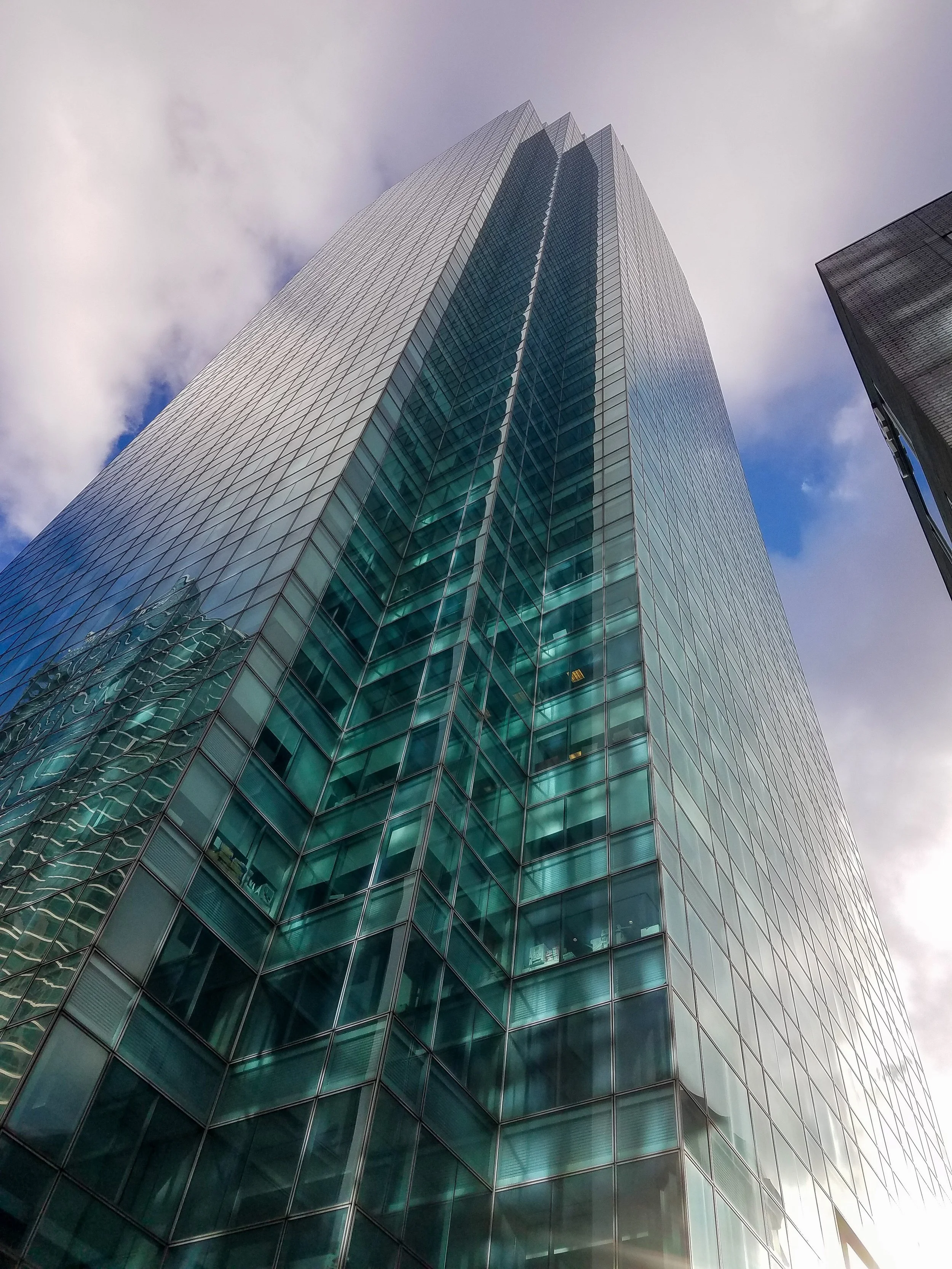
How do work, technology, and aesthetics combine with the property market to generate the distinctive building forms that seem to define a place like New York City?
Your Guide
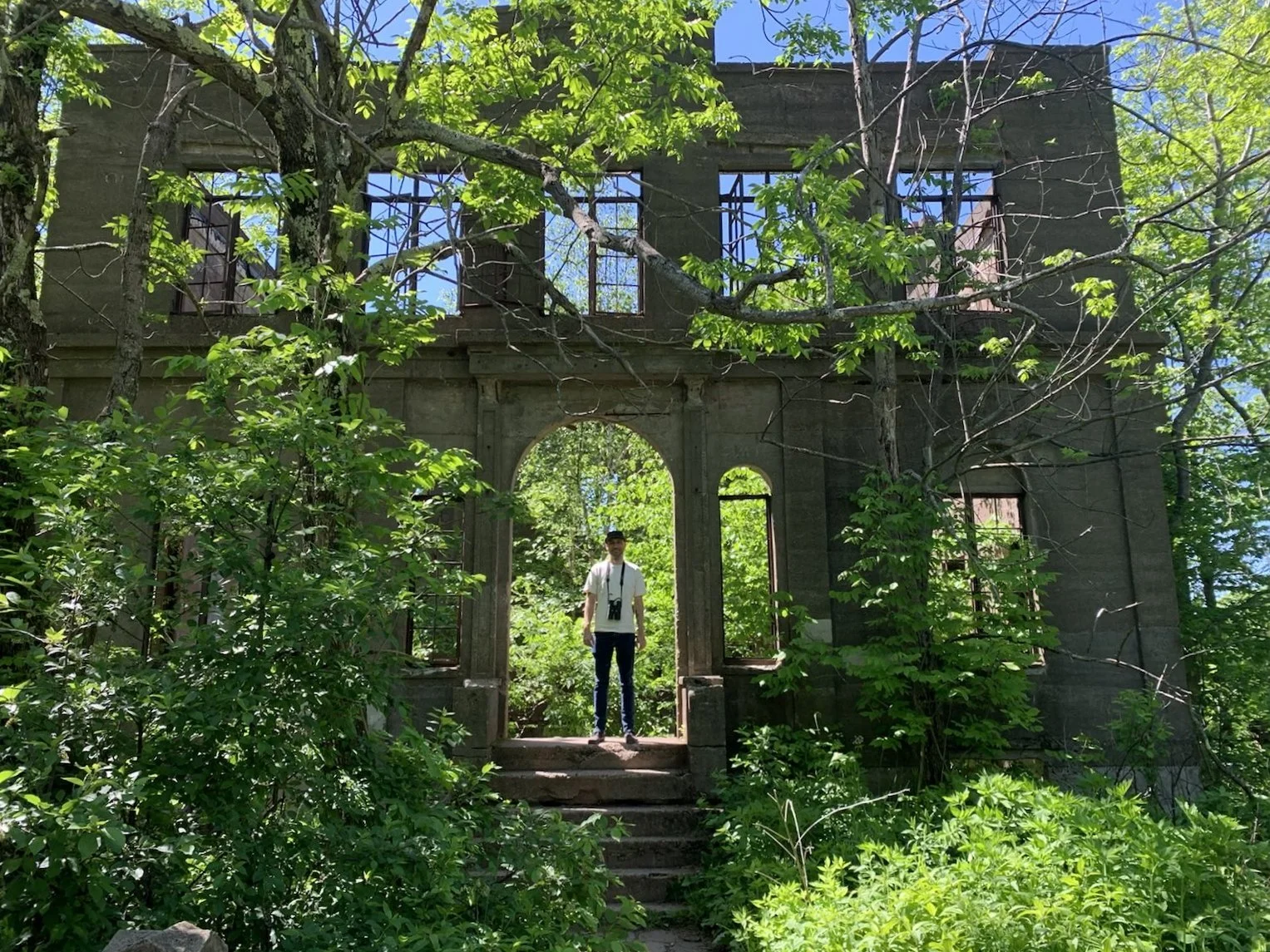
Andy is a historian, writer, editor, and teacher whose work focuses on urban history and in particular the history of New York City. He has a PhD in History from the CUNY Graduate Center, where, among other things, he wrote a dissertation on the deindustrialization of New York City.
Andy brings to our tours over a decade of writing and teaching experience combined with a passion for making the past legible in all its wildness as well as its implications for how we might live today. More information on Andy’s writing and teaching is available at his personal website.
Andy hails from the eastern seaboard but, like so many who have loved the city, is not a native New Yorker. However, he recalls deciding at around age six or seven that there wasn’t much point living anywhere else.
The photo at right depicts your guide amidst the ruins of the Overlook Mountain House outside Woodstock, New York.